Interior Demolition in Greater Cleveland
Wet drywall and sagging ceilings don't dry in place. We cut them out at the damage line and dry what's behind before mold starts.
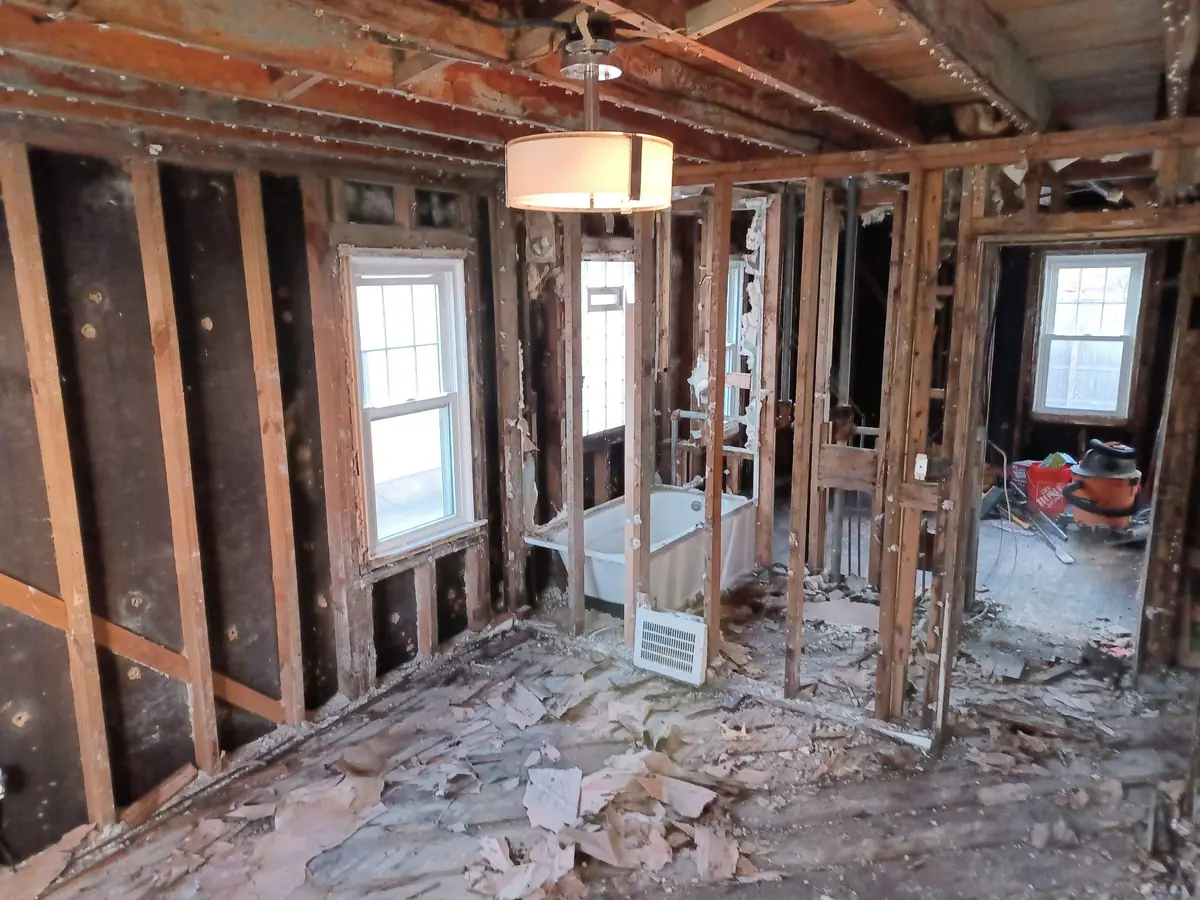
Wet drywall wicks moisture up the wall and holds it against the studs and insulation behind it. A sagging ceiling is worse, because water pooling above it can come down all at once.
We remove the damaged drywall and ceiling at a clean, straight line, dry out the cavity behind it, and leave the space ready for repairs. Catching it early keeps a small patch from becoming a whole wall.
- Clean cut lines
- Cavity drying
- Mold prevention
Wet drywall doesn't dry in place
Drywall is like a sponge. Once it's soaked, it wicks water up the wall and holds it against the studs and insulation behind it. Trying to dry it in place rarely works, and it leaves moisture trapped where mold starts. We cut the damaged drywall out at a clean line above the water damage, which lets us dry the cavity behind it properly. Removing it is faster, cleaner, and far more reliable than hoping it dries.
A clean cut line makes the repair easier
How drywall comes out matters for how it goes back. We remove it in straight, even lines at the studs, so the repair is a clean patch instead of a ragged hole someone has to rebuild. It's a small thing that saves time and money on the rebuild, and it's the kind of detail that separates a proper job from a rushed one.
Ceilings are the urgent version of this
A wet ceiling is more time-sensitive than a wet wall, because water pooling above drywall can bring it down all at once. If a ceiling is stained or sagging, it needs to come down in a controlled way before it fails on its own. We relieve the water safely, remove the damaged section, and dry the space above, so you're not dealing with a collapse and a much bigger mess.
Contained, and documented as we go
We seal off the work area, protect the floors and belongings nearby, and remove materials cleanly rather than tearing through. The debris gets bagged and hauled, not left in a pile, so the parts of your home that were fine stay that way.
As we remove materials, we photograph the damage behind them and record what came out and why. That gives your adjuster a clear scope to work from and protects you later if anyone questions what was removed.
Frequently Asked Questions
Why remove the drywall instead of drying it? +
Soaked drywall holds water against the framing and insulation behind it, where it can't dry properly and mold starts. Cutting out the wet section lets us dry the cavity the right way. It's more reliable than trying to dry drywall in place.
How much drywall has to come out? +
Only what's wet, plus a clean margin above the water line. We use moisture readings to find how high the water wicked, then cut at a straight line so the repair is simple.
Is a sagging ceiling an emergency? +
Treat it as urgent. A sagging ceiling is holding water and can give way suddenly. Stay out from under it and get it addressed fast so it comes down in a controlled way instead of on its own.