
Ice Dam Water Damage Cleanup in Greater Cleveland
An ice dam sends water through your ceiling days after the freeze. Aided Water Damage Restoration finds where it went, dries it out, and documents the claim, across Greater Cleveland and Northeast Ohio.
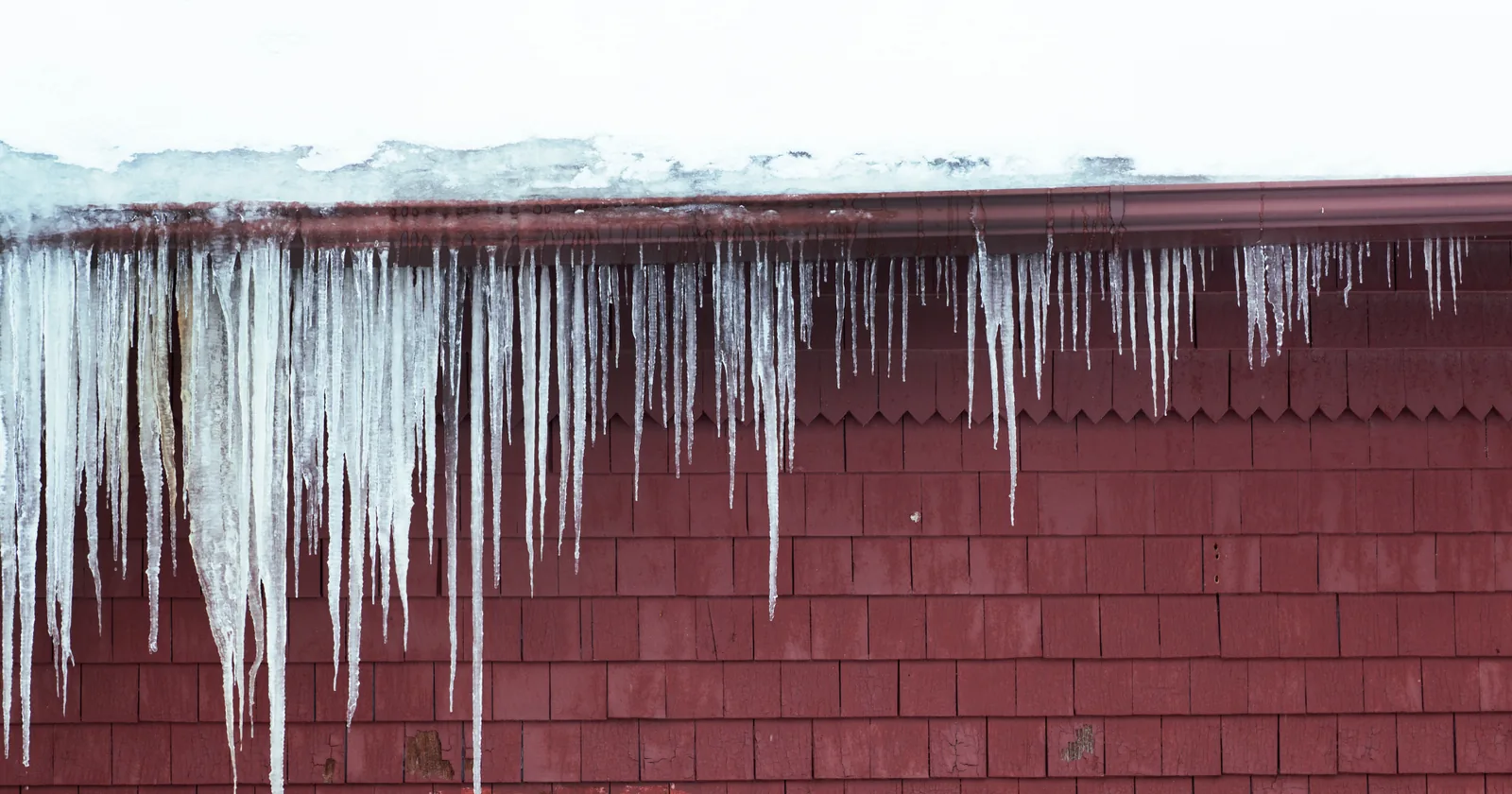
The stain shows up days after the freeze
Water almost never appears while the ice is forming. It turns up later as a brown ring spreading across a bedroom ceiling, or a damp patch running down a wall, sometimes rooms away from the roof edge where the dam actually sat.
There is a lot of winter here for that to happen in. Cleveland averages 63.8 inches of snow a year across roughly 46 days with measurable snowfall, and January alone brings better than 18 inches. Every thaw and refreeze in that stretch is another chance for a dam to form. By the time you see the stain, water has soaked the roof deck, run along the framing, and settled somewhere you can't see, so the first job is tracing it back with moisture meters instead of guessing.
Old Cleveland attics are what make the ice
Ice dams aren't really a roof problem. They're a heat problem. Warm air escaping into the attic melts the snow sitting on your roof, the meltwater runs down to the cold overhang and refreezes, and that ridge of ice traps everything behind it until water backs up under the shingles.
The housing stock here makes it worse. Close to a quarter of the housing around Cleveland was built before 1940, well before attics were insulated and vented the way they are now. That's why the same houses get dams winter after winter while a newer place down the street stays clear.
We don't go on your roof, and that's on purpose
Straight answer, because it's the first thing people ask. We don't climb up and steam the dam off your roof. That's roofing work, and an iced-over roof in January is where people get hurt and where shingles get wrecked by someone working in a hurry.
What we handle is everything the water did once it got inside. If the dam is still up there and still melting, you want a roofer on it, and you'll hear that from us plainly instead of being stalled so the job stays ours. In the meantime the drying can start, because the damage inside doesn't wait for the ice to come off.
Ice dam repair starts inside, not on the shingles
Ice dam repair gets sold as a roof job, but the expensive part is almost always behind the drywall. A dam usually dumps its water into the attic first, and soaked insulation holds that moisture against wood and drywall for weeks. Warm, wet and dark is exactly where mold gets going.
So the attic and the wall cavities under it get checked, saturated insulation comes out, and the framing gets dried until the readings come down. Material gets cut only where it's genuinely ruined. If a ceiling can be dried in place, it gets dried in place, and you keep your ceiling instead of paying to rebuild one.
Covered, if somebody documents it properly
Sudden water damage from an ice dam is typically covered under a homeowner's policy. The fight, when there is one, is almost never about whether it's covered. It's about proving what the water actually reached.
So the loss gets documented the way an adjuster expects. Photos before anything moves, moisture readings logged each day the equipment runs, and a written scope of what came out and why. That record is what keeps you from eating the gap between the bill and the payout. If your adjuster wants to see how far the water traveled and what it took to dry it, it's in the file.
Frequently Asked Questions
Do you take the ice off my roof too, or just clean up the water inside? +
No, we don't go on roofs. Taking the dam off is roofing work, and doing it wrong in January damages shingles and puts somebody on a sheet of ice. We handle everything the water did once it got inside: finding where it traveled, drying the structure, removing what's ruined, and documenting it for your claim. If the dam still needs to come off, you'll be told that straight.
How do I know if water from the ice dam got into my walls or attic? +
Usually you can't tell by looking, which is the problem. A stain shows the endpoint, not the path. Moisture meters and thermal imaging find the rest, including wet insulation above a ceiling that still looks fine from below. A musty smell weeks later, or paint that keeps blistering after everything seemed dry, usually means moisture is still sitting somewhere nobody checked.
Is ice dam water damage covered by my homeowners insurance? +
Typically yes. Sudden, accidental water damage from an ice dam is generally covered under a homeowner's dwelling policy, and you would pay your deductible. What carriers push back on is damage they consider long-term or the result of deferred maintenance, which is why documenting it from day one matters. The roof repair itself may be handled differently from the interior water damage.
What does ice dam cleanup cost? +
Nobody can quote it properly before seeing how far the water went, and that's the honest answer rather than a dodge. What moves the number is how many rooms the water reached, whether the attic insulation has to come out, how many days the drying equipment runs, and how much ceiling or drywall is genuinely ruined instead of dryable. You get a written scope with line-item pricing your adjuster can check before work starts.
Can I just let it dry out with fans instead of calling someone? +
Box fans move air around a room. They don't pull moisture out of insulation, framing, or the space above a ceiling, and that's where ice dam water goes. Drywall can feel dry on the surface while the cavity behind it stays wet for weeks. If the water touched a small area and it really is surface level, you may not need anyone, and you'll hear that.
How fast can you come out during a winter storm? +
Someone answers around the clock. During a hard thaw the phone gets busy, because dams tend to let go across the whole area on the same day rather than one house at a time. You get a straight arrival window on that first call instead of a vague promise. If there's a wait, the most useful thing you can do is get containers under active drips and move what you can out of the way.
Will it happen again next winter? +
Probably, unless the heat loss gets fixed. The dam forms because warm air is reaching the underside of the roof, so the durable fix is attic insulation and ventilation rather than anything done at the gutter line. That work belongs to an insulation contractor or a roofer. What we can tell you is where the water got in and how far it traveled, which is useful to whoever does that work.