Structural Drying & Dehumidification in Greater Cleveland
Drying a home right takes more than fans. We pull moisture out of the structure itself and measure it as we go.
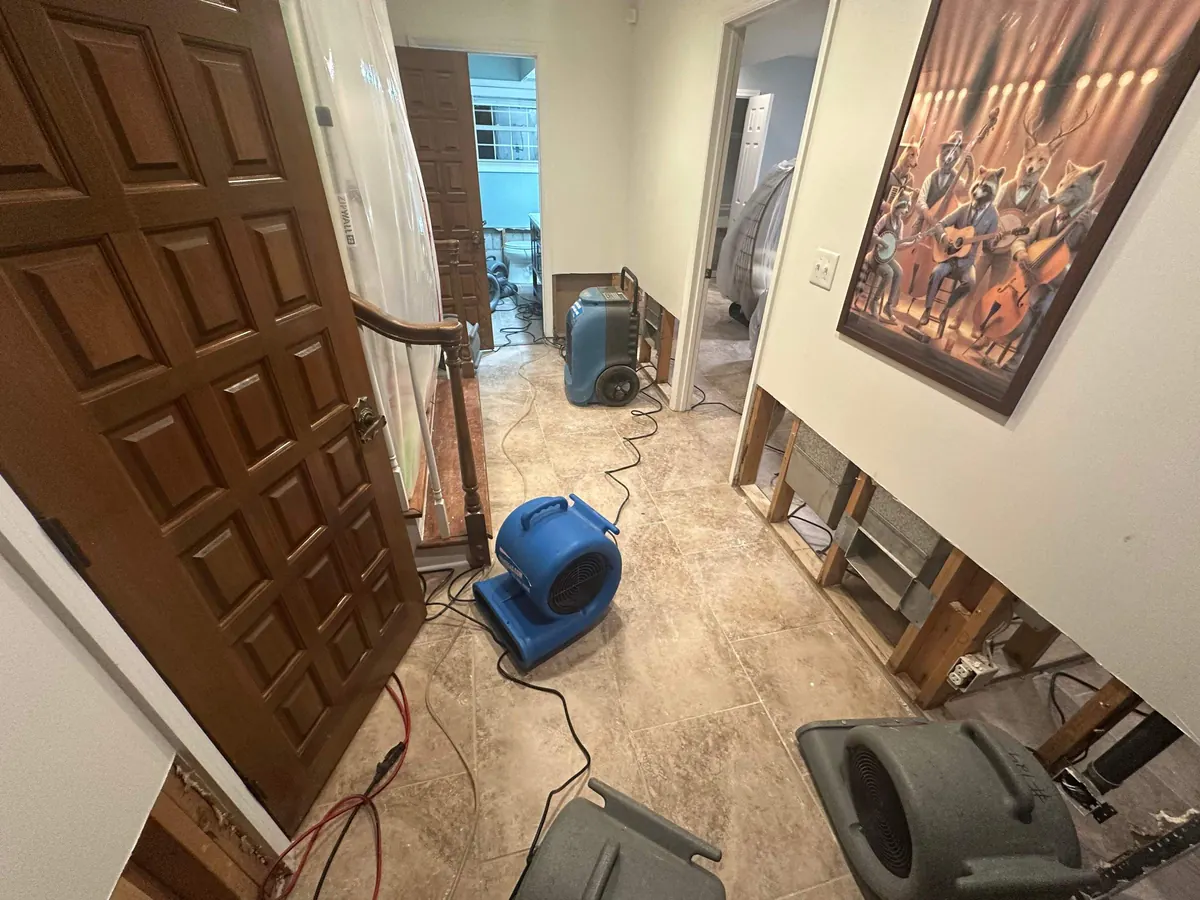
Water hides. Even after the standing water is gone, moisture stays trapped in framing, subfloor, and behind walls, and that's exactly where mold starts.
We use commercial air movers and dehumidifiers, and we take moisture readings throughout the job. That way we're not guessing. We know when your home is truly dry, and we can document it.
- Commercial drying equipment
- Moisture monitoring
- Mold prevention
Drying a home is not the same as it looking dry
A surface can feel dry to the touch while the framing and subfloor behind it are still full of moisture. That trapped water is what feeds mold and warps materials, and you can't see it. Real structural drying pulls moisture out of the building materials themselves, not just the air. We measure moisture inside walls, in the subfloor, and in the framing, and we keep drying until those numbers reach where they should be. Looking dry isn't the goal. Being dry is.
The right equipment, placed the right way
Fans blowing at a wet floor isn't drying, it's guessing. Proper structural drying uses commercial air movers and dehumidifiers sized and positioned for the space, so moving air and moisture removal work together. Too little equipment leaves water behind. The wrong placement dries some areas and misses others. We set up for how your specific space holds moisture and adjust as the readings change, so the whole structure comes down evenly.
Measuring is what makes it verifiable
The only way to know a home is truly dry is to measure it, and measuring is also what proves it to your insurance. We take moisture readings throughout the job and track them as they fall, so there's a record showing the structure reached a safe, dry level. That documentation protects you if a question ever comes up later, and it means we're never guessing about when the job is actually done.
Frequently Asked Questions
How long does structural drying take? +
Most jobs run three to five days, though it depends on how much water there was, the materials involved, and the conditions. We track moisture readings daily and keep the equipment running until the numbers confirm it's dry, rather than pulling it on a fixed schedule.
Why can't I just use my own fans? +
Household fans move air but don't remove moisture from the air or pull it out of materials. Without dehumidification and the right airflow, the water just moves around and stays in the structure. That's how mold gets started even after things look dry.
Will the equipment be loud or in the way? +
Air movers and dehumidifiers run continuously and make some noise, which is normal. We place them to dry effectively while staying out of your way as much as possible, and we'll explain what's running and why.