Commercial Water Damage Restoration in Greater Cleveland
Water damage shuts a business down fast. Aided Water Damage Restoration gets Greater Cleveland offices, shops, and rental buildings dried out and back open, with a real person answering around the clock.
Every hour you're closed is money you don't get back
Water doesn't wait for your business hours. A supply line lets go on a Saturday night, a sump pump quits mid storm, or a hard rain overloads the sewer. Much of older Cleveland still runs on combined sewers, where storm water and sewage share a single pipe, which is why a heavy rain is a real risk to any lower level in those neighborhoods.
Whatever started it, the clock is the problem. Payroll keeps running, tenants keep calling, and nothing is coming in the door. You get a live answer 24/7, standing water out first, and drying equipment set the same visit whenever we can reach you in time. Where the space has to stay open, the work gets scheduled around your hours.
The unit nobody's in is the one that floods
A suite sitting vacant between tenants. A warehouse on a setback thermostat. A shop closed for a long holiday weekend. That's where the expensive losses start, because nothing gets found until someone finally opens the door.
Around here the window for it is long. The National Weather Service puts Cleveland's average first freeze near October 28 and the average last freeze near April 23, so for close to half the year a poorly heated commercial space is exposed. Water runs the entire time nobody is there. If you manage buildings that sit empty, walking them during cold snaps is the cheapest insurance there is. If one has already gone, extraction can start the day you find it.
Nobody's gutting your building on a hunch
Restoration crews have earned a bad reputation here. The story people tell is always the same. A modest loss turns into a room stripped to the studs, a rebuild nobody planned for, and a bill that arrives after the fact.
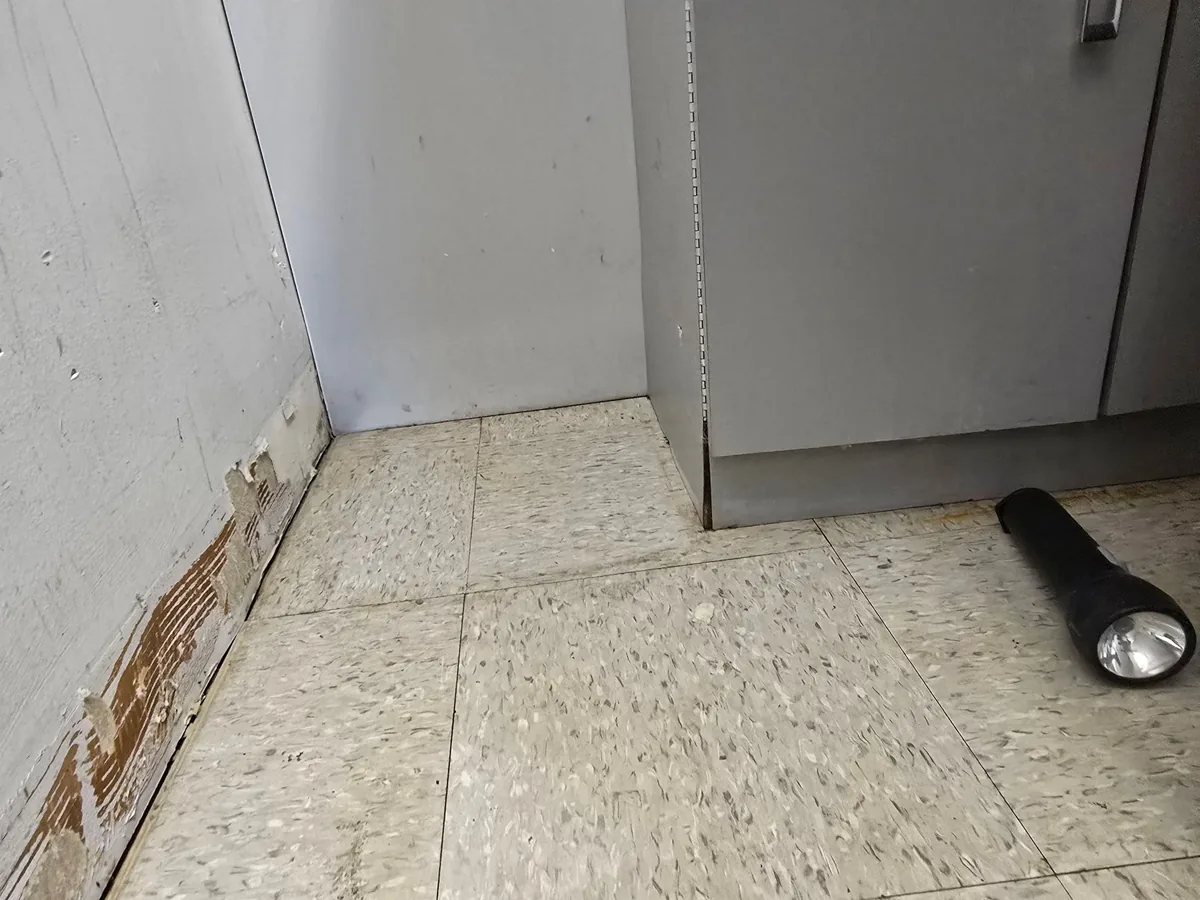
That isn't how your building gets handled. Moisture meters and thermal imaging come out first to find where the water actually traveled, and the real wet line gets marked before anything is cut. What's genuinely ruined comes out. What can dry stays put and gets dried. Less tear-out means a smaller rebuild, a shorter shutdown, and a lower number on the claim. If a wall can be saved, you'll hear that even though removing it would pay us more.
Making sure the policy actually pays
Commercial property policies generally cover sudden, accidental water damage. A pipe that bursts, a water heater that fails, a supply line that gives out. Gradual leaks and long-term seepage usually aren't covered, and that gap is where claims get denied. The difference often comes down to what got proven on day one.
So the loss gets documented the way an adjuster needs it. Photos before anything moves, moisture readings logged daily, and a written scope of what was done and why. Estimates go over in the line-item format carriers expect, so there's no argument later about how many dehumidifiers ran or for how long. If your carrier pushes back, you have the record to push back with.
Nothing on the invoice you can't walk over and check
The horror stories are real. Twelve hours of work spread across a few days and a five-figure bill at the end. Equipment billed that never showed up on site. An estimate that went straight to the carrier and never to the owner. And the most common one of all, a crew that sets fans and disappears while the meter keeps running.
You get the scope in writing before work starts and a copy of everything sent to your insurer. Every fan and dehumidifier on that invoice is one you can walk over and put your hand on. Readings get logged while the equipment runs, so the dry-out is measured instead of assumed. If you're running several properties, you get one contact who knows each building instead of a different crew lead at every address.
Before the crew arrives
Shut the water off if you can reach the valve safely. Kill power to the affected area at the panel. Get people out of standing water. If you can do it without wading in, photograph everything before anything gets moved, because those first photos are the ones the adjuster wants. Have your policy number and your property manager's contact ready.
Frequently Asked Questions
Does my business insurance cover water damage that shuts down my shop? +
Commercial property policies generally cover sudden, accidental water damage like a burst pipe or a failed water heater. Gradual leaks usually aren't. Many policies also carry business interruption coverage that can pay for lost income while you're closed, though that sits in a separate part of the policy. Either way, the loss gets documented so your adjuster has what they need.
Who pays when the building is leased, the landlord or the tenant? +
Usually both, in different directions. The building itself, meaning walls, floors, and permanent fixtures, generally falls to the owner's property policy. What you brought in, meaning inventory, equipment, and improvements you paid for, generally falls to your tenant policy. Your lease decides the edges. The loss gets documented so both carriers are working from the same photos and readings instead of arguing over what was wet.
What's this going to cost? +
Nobody can give you a real number over the phone, and a firm quote before anyone has seen the building is a guess dressed up as an answer. What moves the number is how much square footage got wet, how many days the equipment has to run, whether the water was clean or contaminated, and how much material has to come out. After the first set of readings you get a written scope with line-item pricing your carrier can check against their own numbers.
How fast can someone actually get here? +
A real person answers around the clock, not an answering service taking a message. How quickly a crew reaches you depends on where you are in Northeast Ohio and what's already running that night. You get a straight arrival window on that first call instead of a vague promise, and extraction usually starts on that same visit.
Can you work around our business hours so we don't have to close? +
Yes. Where a space has to stay open, the loud work gets scheduled around your hours while the drying equipment keeps running quietly in the background. In a section you can close off, crews can work overnight to shorten the shutdown. Give us your operating hours on the first call and the schedule gets built around them.