Mold Remediation in Greater Cleveland
Mold usually means there's a moisture problem behind it. We remove the mold and dry out what's feeding it.
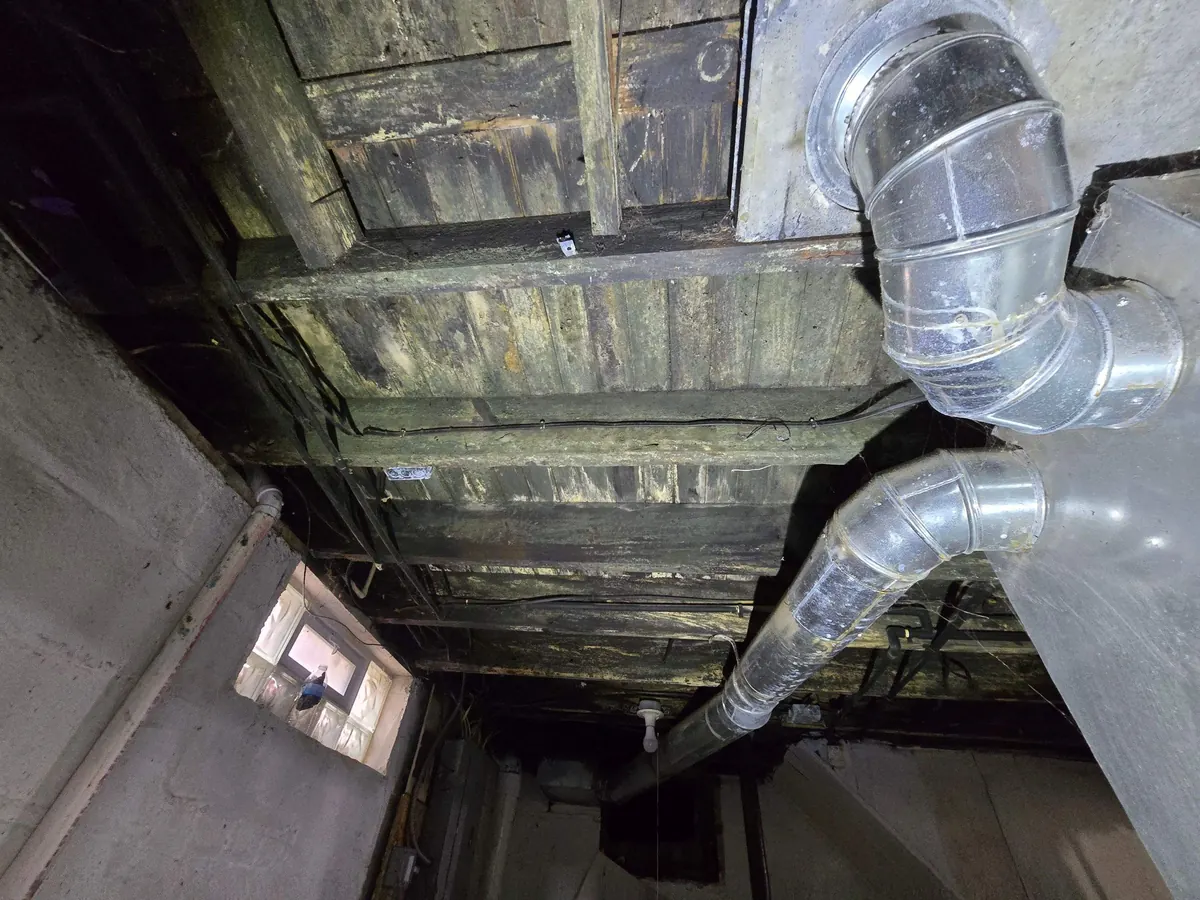
Mold is a symptom. It shows up when moisture sticks around, whether from a slow leak, a past flood, or high humidity. Cleaning the surface without fixing the moisture just means it comes back.
We contain the area so spores don't spread, remove the mold safely, and dry out the source. Then you know the problem is actually handled, not just hidden.
- Containment
- Safe removal
- Moisture source drying
Mold is a moisture problem first
Mold doesn't grow without moisture, so every mold problem is really a water problem underneath. Cleaning mold off a surface without fixing what's feeding it just means it comes back, often in the same spot. We find and address the moisture source, whether it's a past leak, a flood that wasn't fully dried, or ongoing humidity, so the fix actually holds. Remove the mold, fix the moisture, and it stays gone.
Containment keeps it from spreading
Disturbing mold without containment can send spores through the rest of the house, turning a small problem into a big one. That's why proper remediation starts with sealing off the area. We contain the space, remove the mold safely, and clean up so spores don't scatter into rooms that were fine. Doing it in the open, without containment, is how a bathroom problem becomes a whole-house problem.
Surface cleaning isn't remediation
Wiping mold with a store-bought spray treats what you can see and leaves what you can't. Mold works into porous materials and grows behind walls and under floors where a wipe-down never reaches. We handle it as a real removal job: contain the area, remove affected materials where needed, treat the surfaces, and dry the source. That's the difference between mold that's actually gone and mold that's just out of sight for a while.
Frequently Asked Questions
Is mold in my house dangerous? +
It can affect your air and, for some people, their health, especially those with allergies or breathing issues. Beyond that, mold means there's a moisture problem that's also damaging your home. Either way, it's worth handling properly rather than ignoring.
Can't I just clean the mold myself? +
For a tiny spot on a hard surface, maybe. For anything more, cleaning the surface without containment or fixing the moisture usually spreads spores and lets it come back. A real removal handles the source and keeps it from spreading.
How do I stop mold from coming back? +
Fix the moisture that's feeding it. That's the whole key. We remove the mold and dry out the source, whether it's a leak, an old flood, or humidity, so it doesn't just return in the same place.