By Omar Ayoub, owner, Aided Water Damage Restoration
Most of my junk removal jobs start as water damage calls. A pipe bursts or a basement floods, and now there’s soaked drywall, a ruined couch, and warped flooring that all has to come out before mold sets in. I’m already on-site doing the restoration, so my crew hauls the debris in the same trip. You’re not chasing down a separate hauler while your basement sits wet.
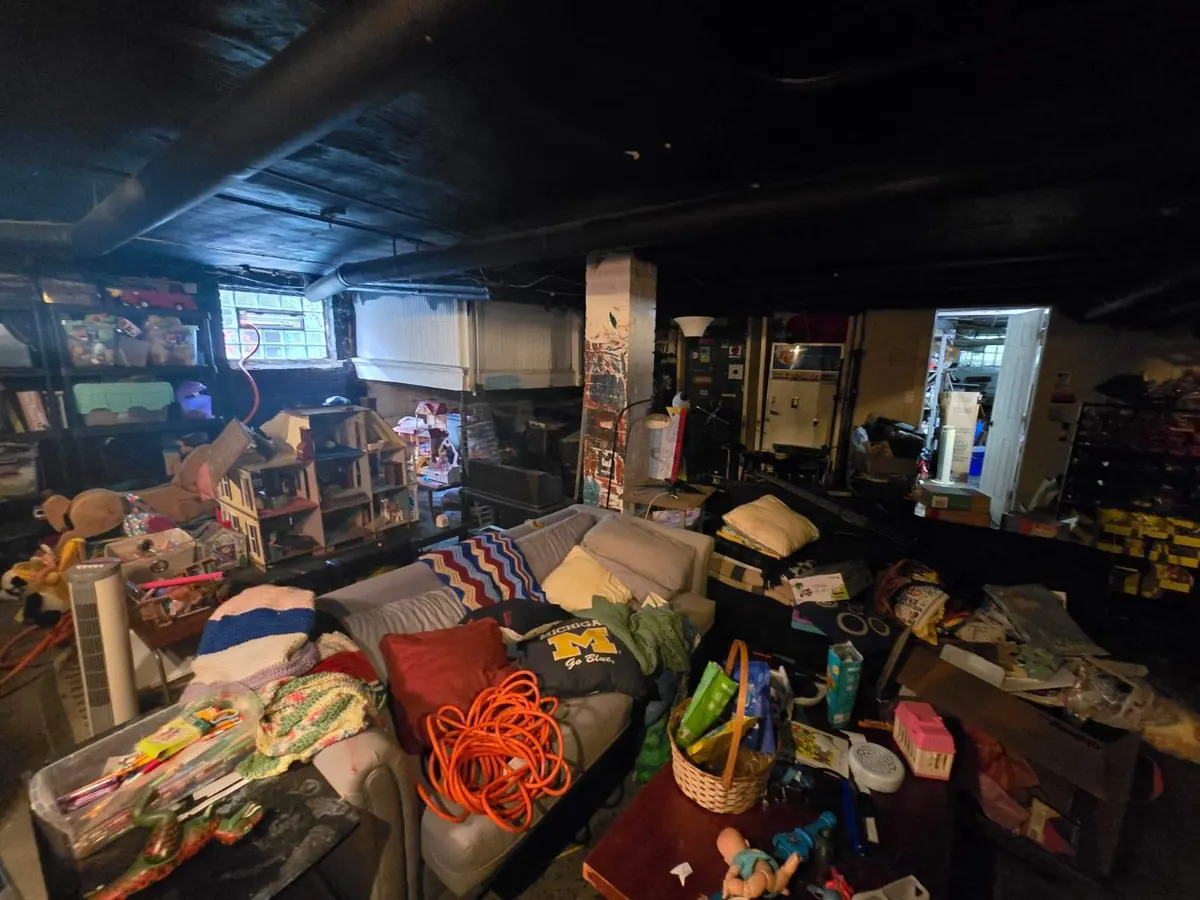
But it’s not only floods. Got a garage you can’t park in, a room full of old furniture, or a basement that’s quietly turned into a storage unit you’re afraid to open? I clear those out too. You point at what needs to go, and it goes.
Quick note on who you’re calling. I’m local, licensed, and insured, and I’m the one who answers the phone. You’re letting a crew into your garage and basement, so it should be people who are accountable, not a rotating set of subs. You can read what people have said about working with us on our Google profile.
Why hauling it yourself is a bigger job than it looks
People underestimate what a cleanout actually takes. It’s not just lifting heavy stuff. It’s figuring out where everything goes.
Some items can’t ride in a regular trash bin. Others have to go to a specific facility. And if you’ve ever rented a truck for this, you know the drill: it eats most of a weekend, plus the rental fee, plus a dump fee on the far end. When you hire it out, someone else handles the loading, the hauling, and the disposal. That’s a good trade when your weekend’s already full.
What I’ll take
Most of it. The usual list looks like this: old furniture like couches, chairs, beds, and dressers. Appliances that have quit on you. Water-damaged materials and debris. Yard waste and outdoor clutter. General household junk. And whatever got left behind after a move or a renovation.
Not sure your particular pile qualifies? Ask. I can usually give you a straight answer in a minute.
Where your stuff actually ends up
Not everything can go in a bin at the curb. Appliances, electronics, construction debris, and anything treated as hazardous each have their own disposal rules, and sorting that out is part of what you’re hiring me for. It comes up most on estate and rental cleanouts, where people want to know the load is being handled properly rather than dumped wherever is closest.
How pricing works
I’m not going to make you guess. Most haulers, me included, price by how much room your stuff takes up in the truck, so a few old appliances costs less than a full basement cleanout.
Three things move that number. How much there is, obviously. How hard it is to reach, because a basement with a tight turn at the bottom of the stairs takes longer than a garage I can back up to. And whether anything in the load has its own disposal route, like appliances or construction debris. I look at the pile, give you the price before we load anything, and there’s no surprise fee waiting for you at the curb.
If this is part of a water damage job going through insurance, the debris removal shows up as line items on the same claim, and I document it the way your adjuster needs it.
Junk removal after a flood
This is where being a restoration company actually helps you. When a basement floods, the aftermath is more than water. Ruined flooring, swollen drywall, soaked furniture, damaged belongings. It adds up fast, and it needs to come out quickly, because wet material left in place is how mold gets started.
Since I’m already there drying the place out, the debris removal is part of the same job. One call, one crew, one less contractor to coordinate while you’re stressed. It also means the tear-out and the haul-away happen in the right order, instead of a hauler showing up before the wet material has been pulled.
The kind of work I see around Cleveland
The typical house around Cuyahoga County went up in the late 1950s, and plenty of them have only had one or two families in them since. That shapes most of my cleanout work. Sixty-odd years of a basement being where things went when nobody wanted to decide about them. Garages built for a 1958 sedan that haven’t had a car in them since the nineties. When the house finally changes hands, whether that’s a sale, an estate, or a landlord turning a unit over, all of it has to come out at once and usually on a deadline.
The other half is water. Post-storm basement debris, and the ruined material that comes out of a flooded lower level. Point is, I know the region and I show up when I say I will.
How to get started
It’s simple. You reach out, tell me what needs to go and where it is, and we set a time. You don’t have to lift a thing first. No dragging everything to the curb, no sorting into piles. Just show my crew what’s going.
Ready to get your space back?
If a cleanout’s been sitting on your list because it feels like too much to tackle alone, hand it off. Use the callback form on any page here and it comes straight to me. Name and number is all I need to start.